
Giving the GoPro MISSION 1 PRO ILS Autofocus with DJI Focus Pro LiDAR
The GoPro MISSION 1 PRO ILS is one of the more interesting cameras I’ve used in a while.
It takes the compact, mount-it-anywhere philosophy of a GoPro and adds something we've never really had from the company before: an interchangeable Micro Four Thirds lens mount and a camera designed much more like a tiny cinema camera.
There is one pretty significant catch, though.
No autofocus.
The MISSION 1 PRO ILS is built around manual lenses, which makes sense for a cinema-focused camera, but there are plenty of situations where I want the size of this camera without having to constantly pull focus myself.
So I started experimenting.
The solution I landed on combines the GoPro MISSION 1 PRO ILS, DJI Focus Pro LiDAR, DJI Focus Pro Motor, a SmallRig Sony camera cage, and an iPhone 18 Pro Max.
The end result is essentially a tiny interchangeable-lens GoPro cinema rig with LiDAR-based autofocus.
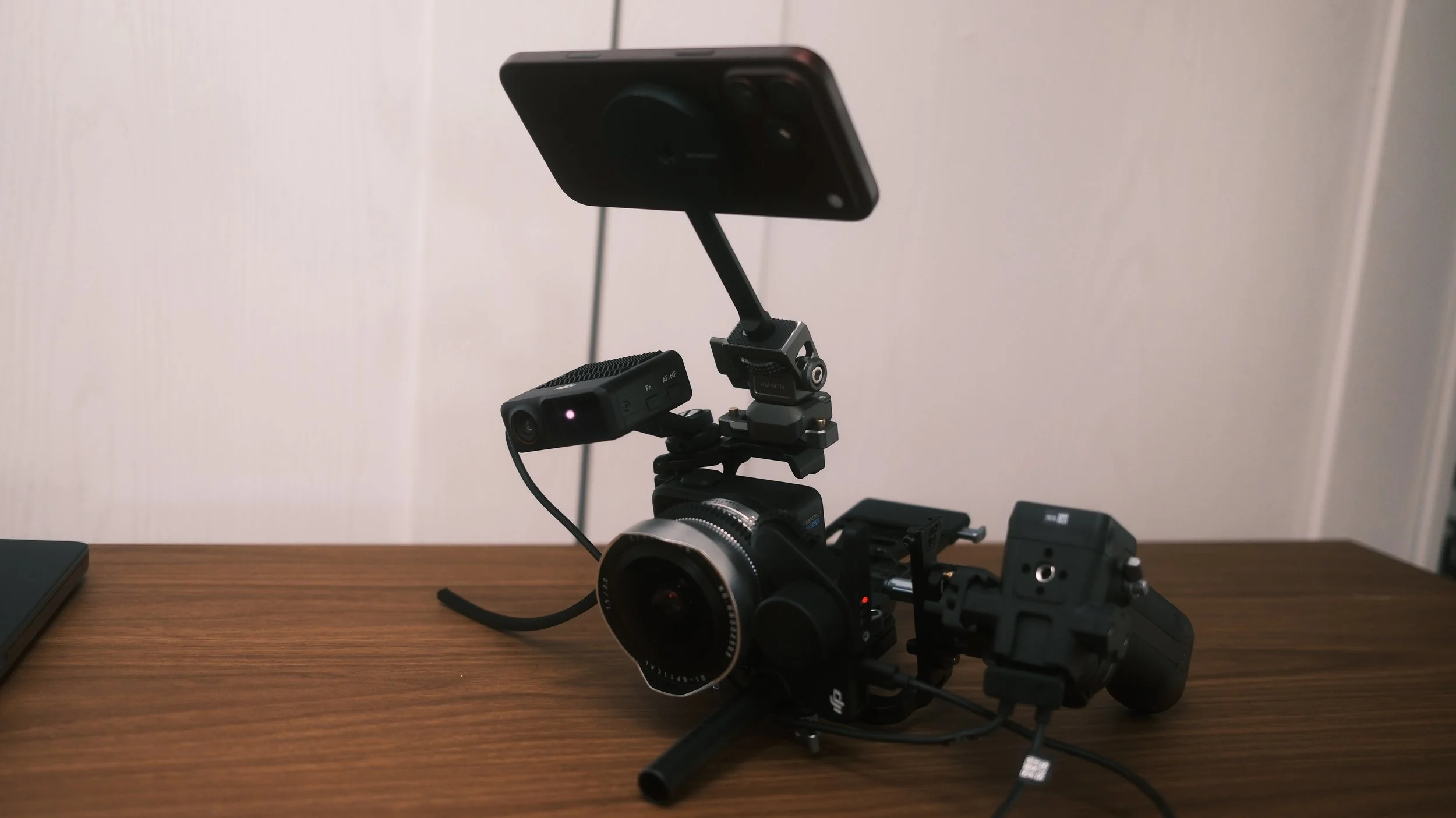
Why Add Autofocus to the MISSION 1 PRO ILS?
One of the things that makes the MISSION 1 PRO ILS so appealing is also what creates the problem.
Being able to put real glass in front of such a small camera opens up a ton of possibilities. Instead of the ultra-wide fixed-lens look traditionally associated with GoPro cameras, you can start experimenting with different focal lengths, shallow depth of field and completely different visual styles.
But once you start shooting with shallower depth of field, focus becomes much more important.
For controlled cinema work, pulling focus manually isn't necessarily a problem. For gimbal work, moving subjects, solo shooting or situations where the camera is mounted somewhere difficult to reach, it becomes another story.
That's where DJI's LiDAR focusing system becomes really interesting.
Instead of relying on autofocus communication between the camera body and lens, the DJI system can physically control focus using the Focus Pro Motor.
That makes it a great match for a camera like the MISSION 1 PRO ILS.
Building the Rig
The first problem I had to solve wasn't autofocus.
It was rigging.
The MISSION 1 PRO ILS is incredibly small, while the DJI LiDAR system needs a stable mounting position relative to the camera and lens. I also needed somewhere to mount the focus motor, cables and other accessories without turning the entire thing into a mess.
My solution was somewhat unconventional.
I'm using a SmallRig cage originally designed for a Sony camera as the foundation of the build.
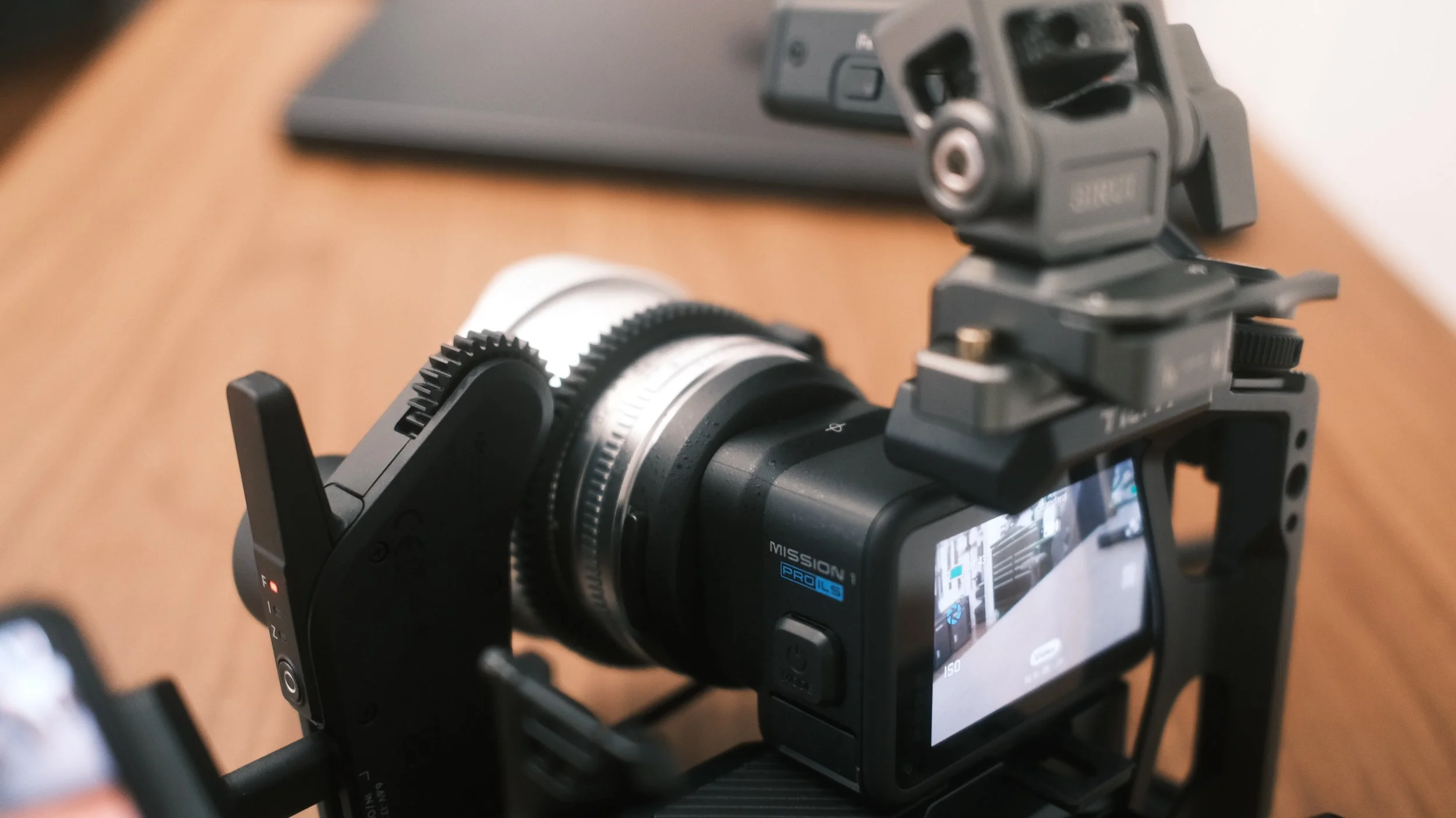
The cage gives me the mounting points that the small GoPro body doesn't naturally have. From there I can attach the LiDAR module, position the focus motor and start treating the MISSION more like a traditional cinema camera.
Is the cage technically designed for this camera?
No.
Does it work?
Absolutely.
And that's one of my favorite things about building camera rigs. Sometimes the best solution isn't waiting for someone to manufacture the exact accessory you need. It's looking at what already exists and figuring out how to adapt it.
Adding DJI Focus Pro LiDAR
The key component is the DJI Focus Pro LiDAR.
The LiDAR unit measures the distance to the subject independently of the GoPro's imaging system. That information is then used by the Focus Pro system to drive the focus motor attached to the lens.
So the GoPro itself still isn't technically autofocusing.
The autofocus system exists around the camera.
That's an important distinction, because it means we're not modifying the GoPro or trying to create electronic communication between the camera and lens.
Instead, the DJI Focus Pro Motor physically turns the lens's focus ring.
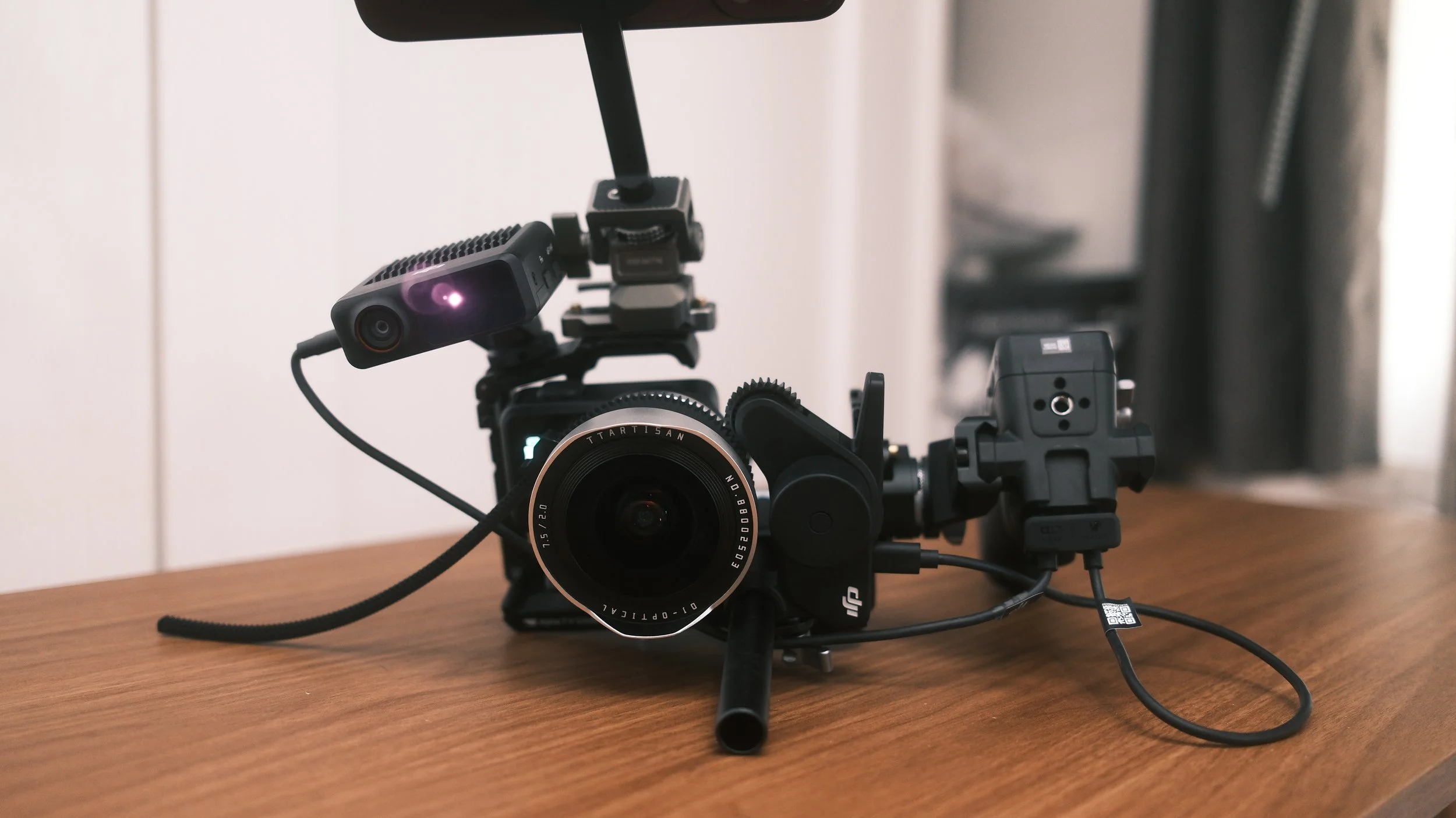
Once everything is mounted and calibrated properly, the Focus Pro system knows how the physical movement of the motor corresponds to the lens's focus range.
Now the LiDAR can track distance changes and move the lens accordingly.
Suddenly, a completely manual lens can behave much more like an autofocus lens.
Turning the iPhone 18 Pro Max Into the Monitor
The other major part of my setup is the monitor.
Rather than adding a dedicated five or seven-inch production monitor, I'm using my iPhone 18 Pro Max.
GoPro's MISSION Monitor workflow gives me a much larger view of the image than the screen on the back of the camera while keeping the entire package relatively compact.
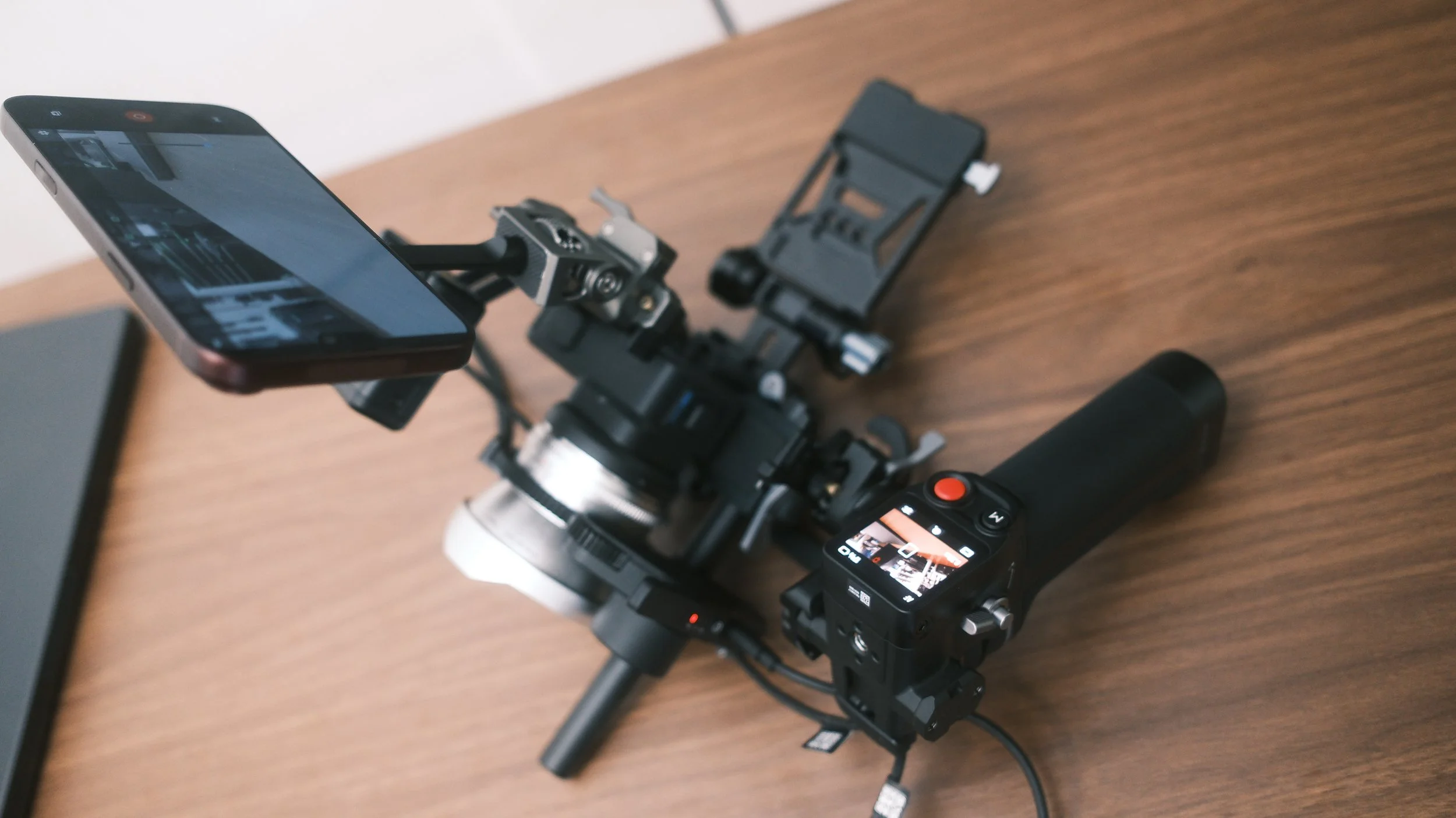
For this particular build, I think that combination makes a lot of sense.
The MISSION 1 PRO ILS is supposed to be small. Attaching a large traditional monitor starts to defeat some of the reason I wanted to build around this camera in the first place.
The iPhone gives me a large, bright display that I already carry with me.
It also means one less dedicated monitor, battery and charger in the production kit.
I can use the iPhone for framing and monitoring while letting the DJI LiDAR system concentrate on focus.
The Complete Setup
My current build consists of:
GoPro MISSION 1 PRO ILS
Micro Four Thirds manual lens
DJI Focus Pro LiDAR
DJI Focus Pro Motor
SmallRig Sony camera cage
Focus gear around the lens
iPhone 18 Pro Max as the monitor
Mounting hardware and power/cabling for the Focus Pro system
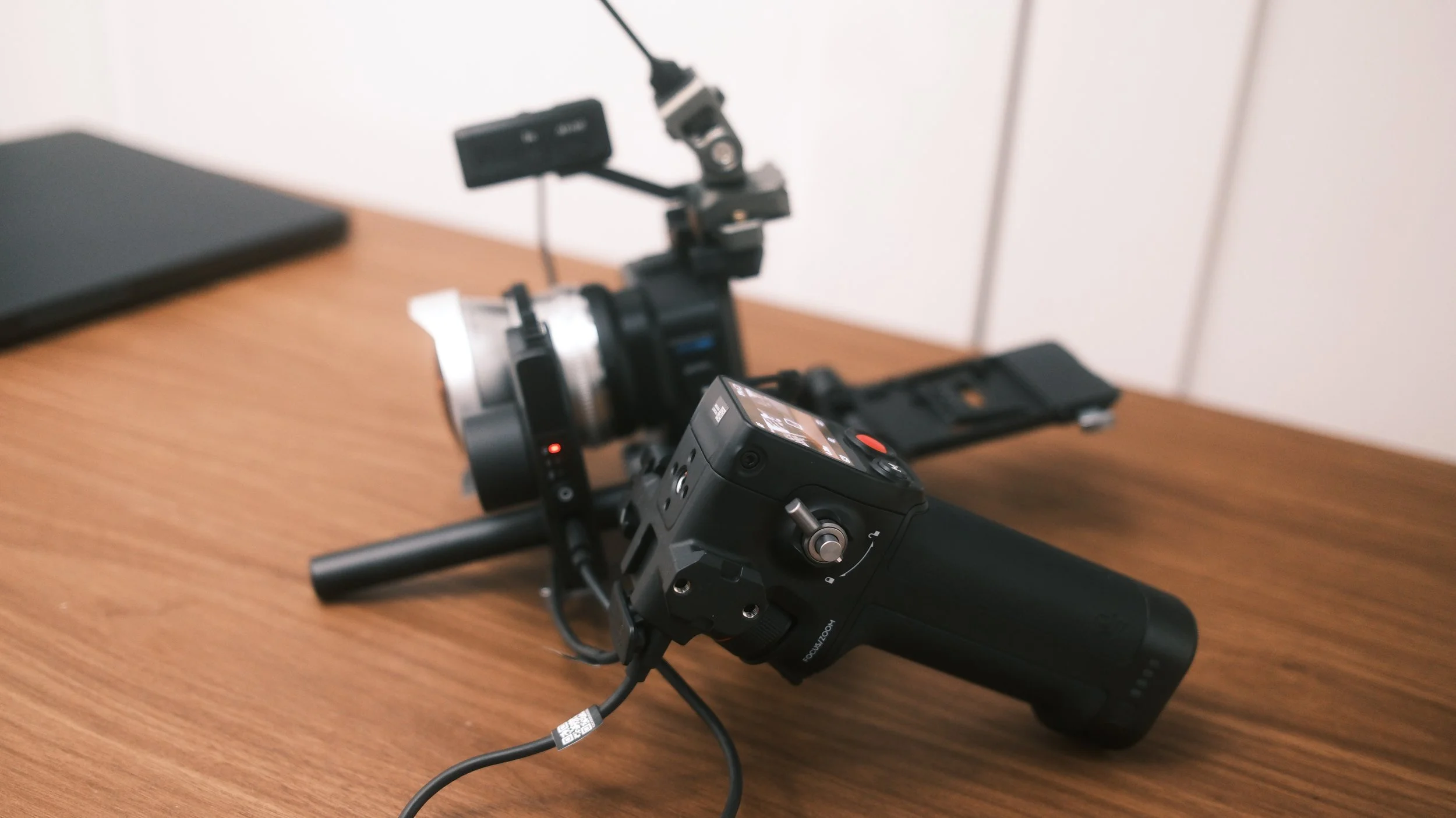
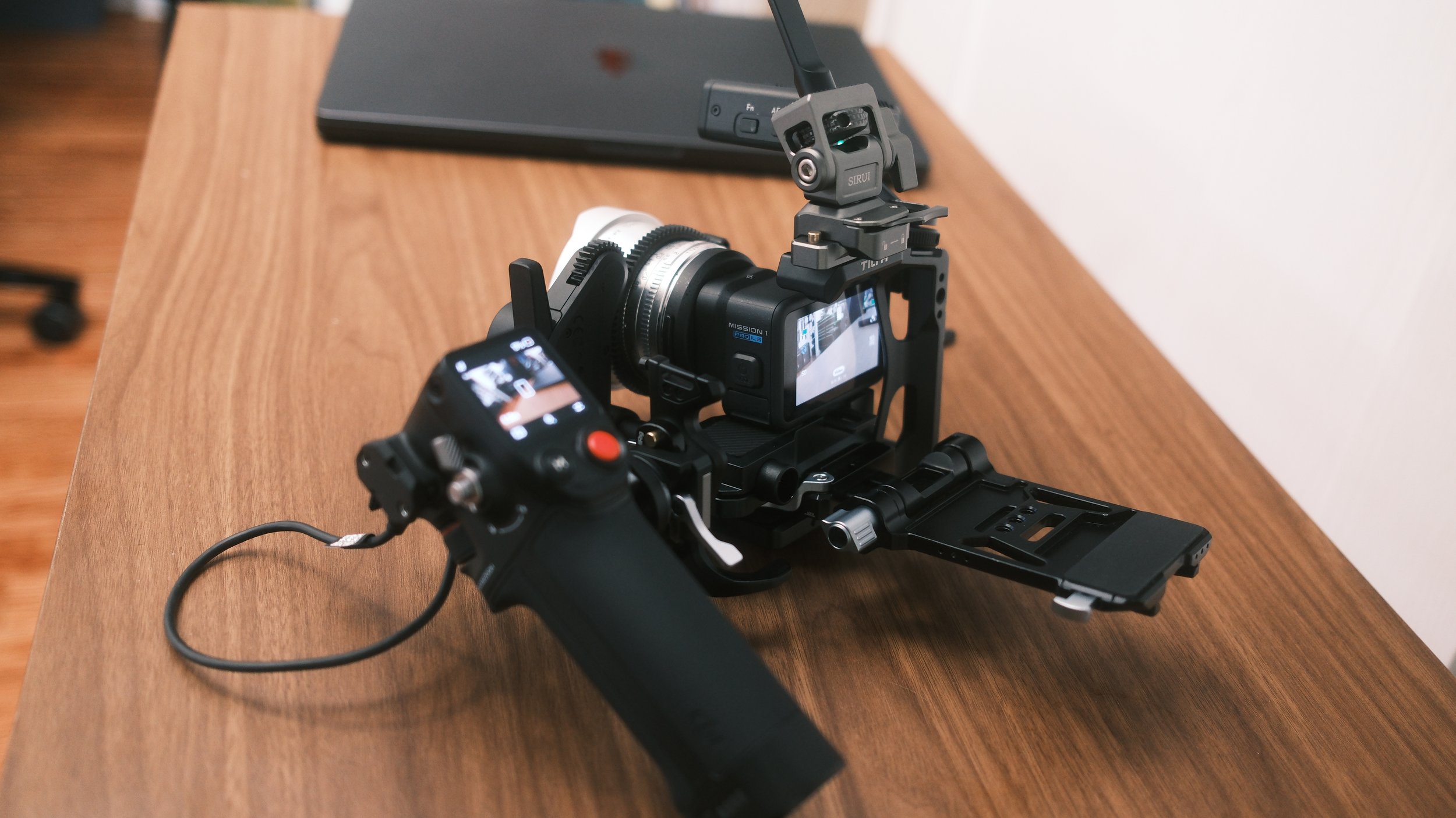
There's definitely some irony in taking one of the smallest interchangeable-lens cinema cameras available and immediately surrounding it with accessories.
But even fully built out, the package is still remarkably compact compared with a traditional cinema camera rig.
More importantly, every component is solving a specific problem.
The cage gives me mounting points.
The Focus Pro Motor gives the manual lens physical focus control.
The LiDAR gives the system subject-distance information.
And the iPhone gives me a larger monitoring interface.
Calibration Matters
This setup does require some initial configuration.
The DJI system needs to understand the focus range of the lens so that the motor knows where infinity and minimum focus are located. The physical relationship between the LiDAR unit, camera and lens also needs to remain consistent.
That means this isn't something I want shifting around halfway through a shoot.
The cage becomes particularly important here because it turns all of these separate pieces into one rigid system.
Once everything is mounted, aligned and calibrated, the rig becomes much easier to work with.
If I change lenses, I expect to spend some time checking the motor position and focus calibration again.
It's not as seamless as mounting a native autofocus lens on a Sony or Canon body.
But that's also not really the point.
Why This Setup Is Interesting
What excites me most about the MISSION 1 PRO ILS isn't simply that it's a small camera.
It's that we're reaching a point where modular camera technology lets us build very specific tools.
The camera doesn't have autofocus?
Add an external LiDAR focusing system.
The screen is too small?
Use the phone already in your pocket.
The body doesn't have enough accessory mounting points?
Adapt a cage from another camera.
Each product is essentially becoming a building block.
And once you stop thinking of the MISSION 1 PRO ILS as an action camera and start treating it like a tiny modular cinema camera, some really interesting possibilities open up.
Where I See Myself Using It
For RBM Productions, I can see this setup being particularly useful for vehicle rigs, gimbals, tight spaces, lightweight handheld builds, unusual camera placements and situations where putting a full-sized cinema camera isn't practical.
It's also just fun to experiment with.
A huge part of production is finding ways to make existing technology do something it wasn't necessarily designed to do.
This build is a perfect example.
GoPro made an extremely small interchangeable-lens camera.
DJI made a LiDAR system capable of controlling manual lenses.
SmallRig made a cage for a completely different camera.
Apple made the phone I'm carrying around every day.
Combine all four and you end up with something none of those products really are individually:
a tiny GoPro cinema camera with LiDAR autofocus and a large wireless monitoring setup.
And that's exactly the kind of weird production experiment I love.
RBM Production Notes explores new cameras, production technology, unconventional rigs and the tools we're experimenting with at RBM Productions.